Complete electrostatic powder coating lines and the equipment around them — pre-treatment, spray booths, recovery, powder supply, automatic spraying and explosion protection. Supplied from our partner factory in Changzhou, built to your workpiece size and output.
You do not have to assemble a coating line from five different suppliers. We quote the whole sequence as one package, and you keep one contact for the spares afterwards.
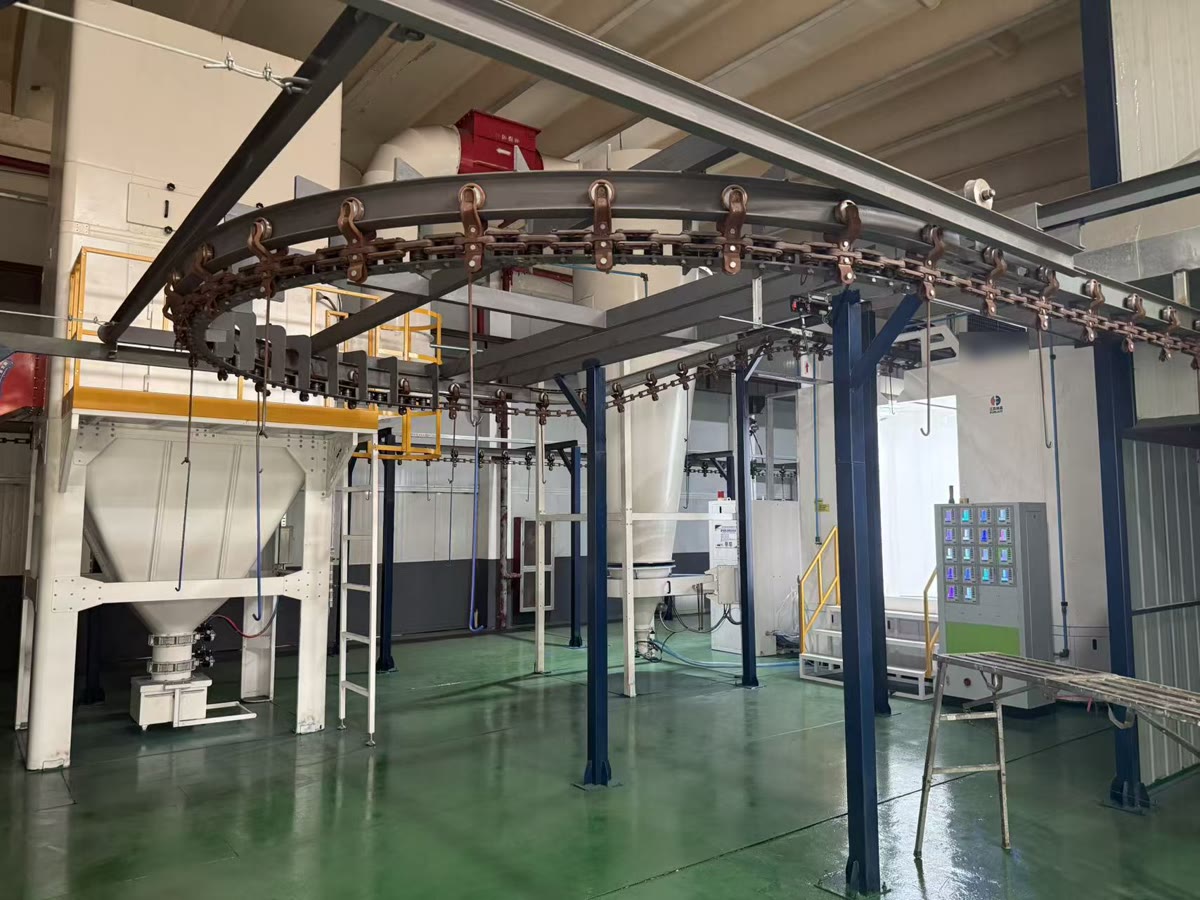
Booths are where most line problems start, so this is the part we spend the most time on. Arc panels on four sides and the roof cut the cleaning time between colour changes; a dual extraction base keeps airflow even, lifts powder transfer efficiency and stops powder drifting out of the opening.
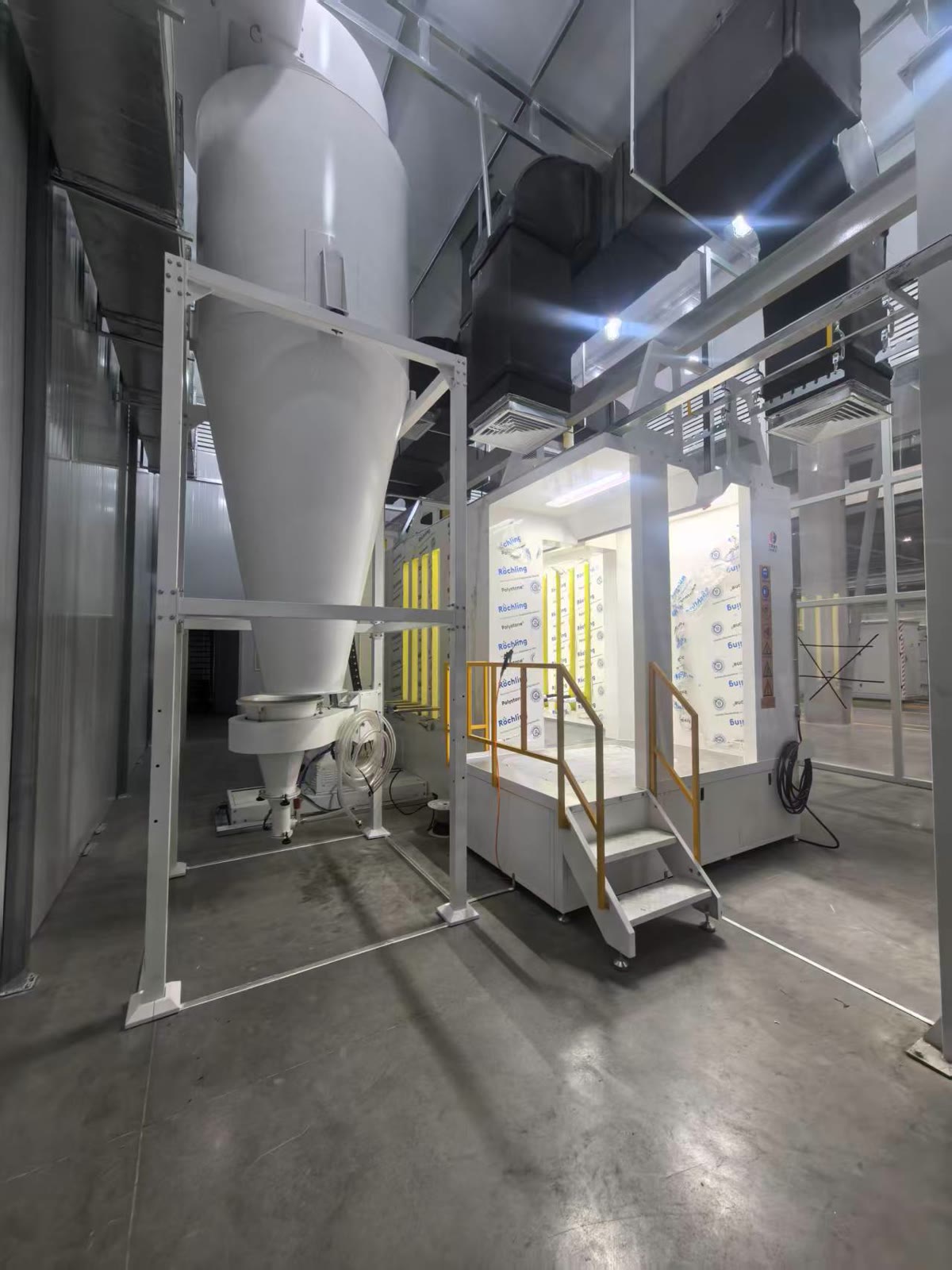
Open-type or dual-station, for flat panels and medium parts. Quick colour change is the point of this design.
Custom width & length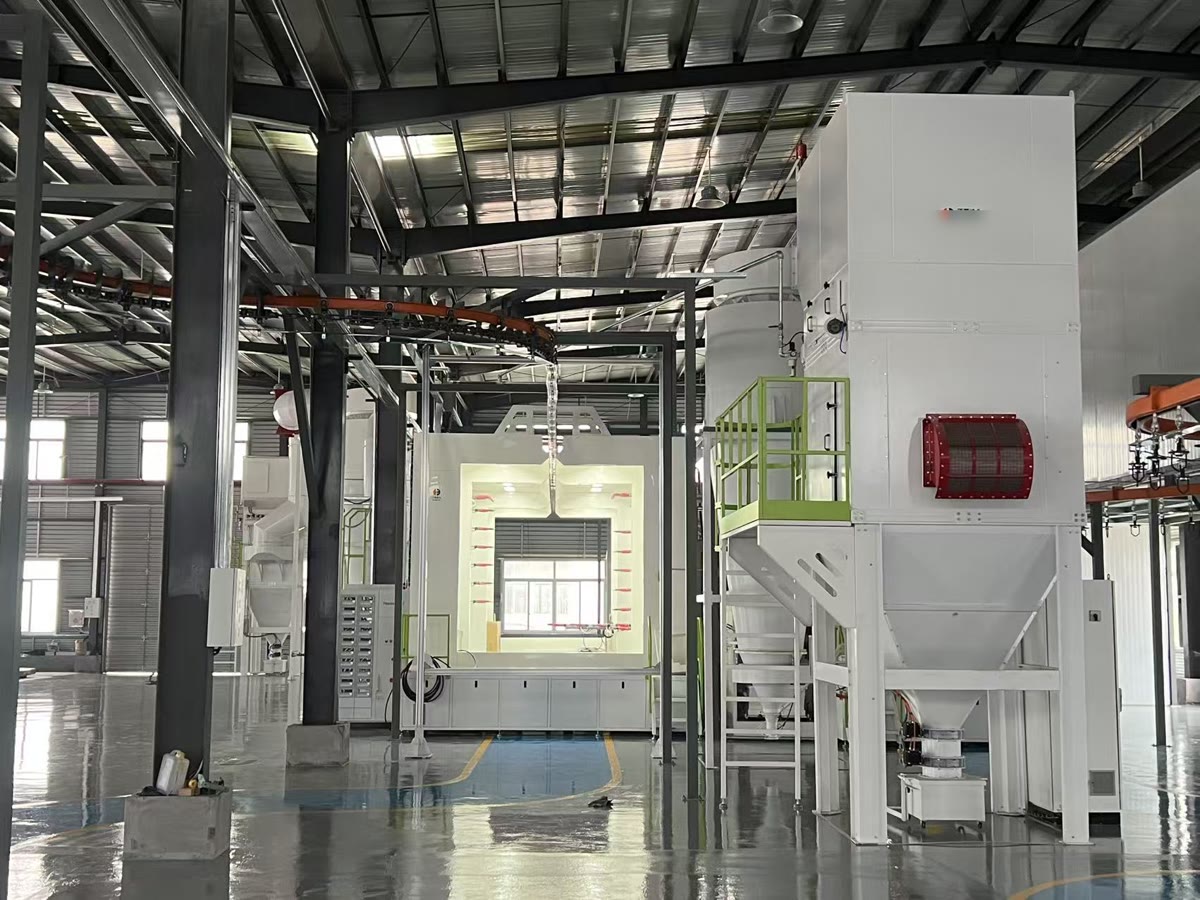
For very large or heavy workpieces that are conveyed through on a hanger, with operator access inside the booth.
Up to very large parts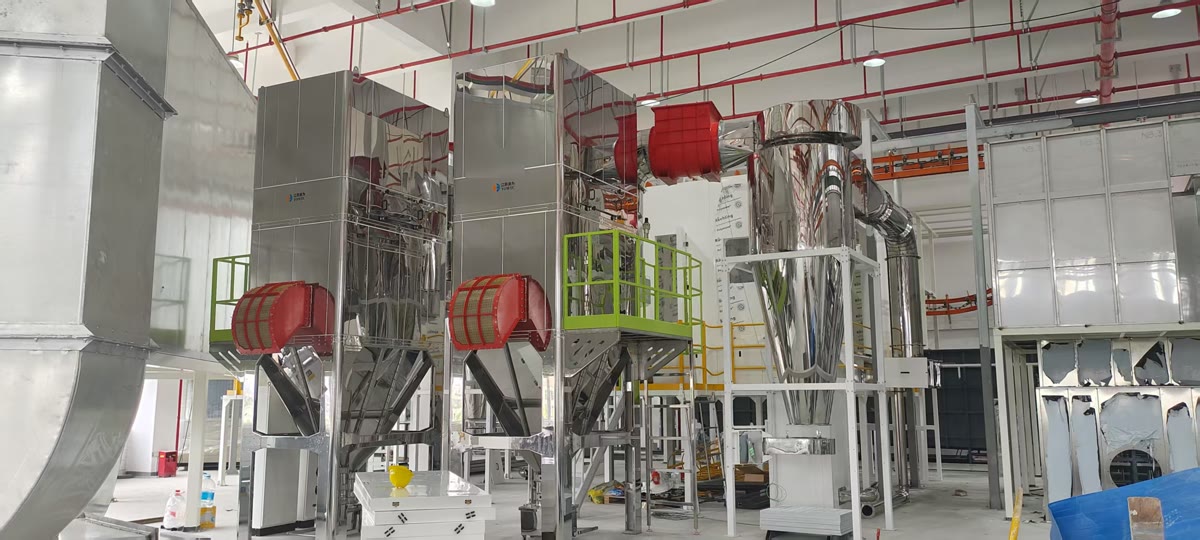
Flame-retardant PPS panel construction, stainless steel cyclone and explosion venting as one package.
ATEX-style safety layoutPowder that is recovered cleanly is powder you do not buy twice. The cyclone takes the bulk of the reclaim, the precision filter catches the fine fraction, and the safety devices keep the whole system within its explosion limits.
High-efficiency single or multi-cyclone, carbon steel or stainless steel, sized to your extraction volume.
Second-generation arc-shaped filter modules, designed for quick cartridge change and easy cleaning.
For closed-loop powder systems where the reclaim is fed straight back to the hopper.
Where a line runs one colour, a standard hopper is enough. Where it runs several, the supply centre is what decides how long the changeover takes.
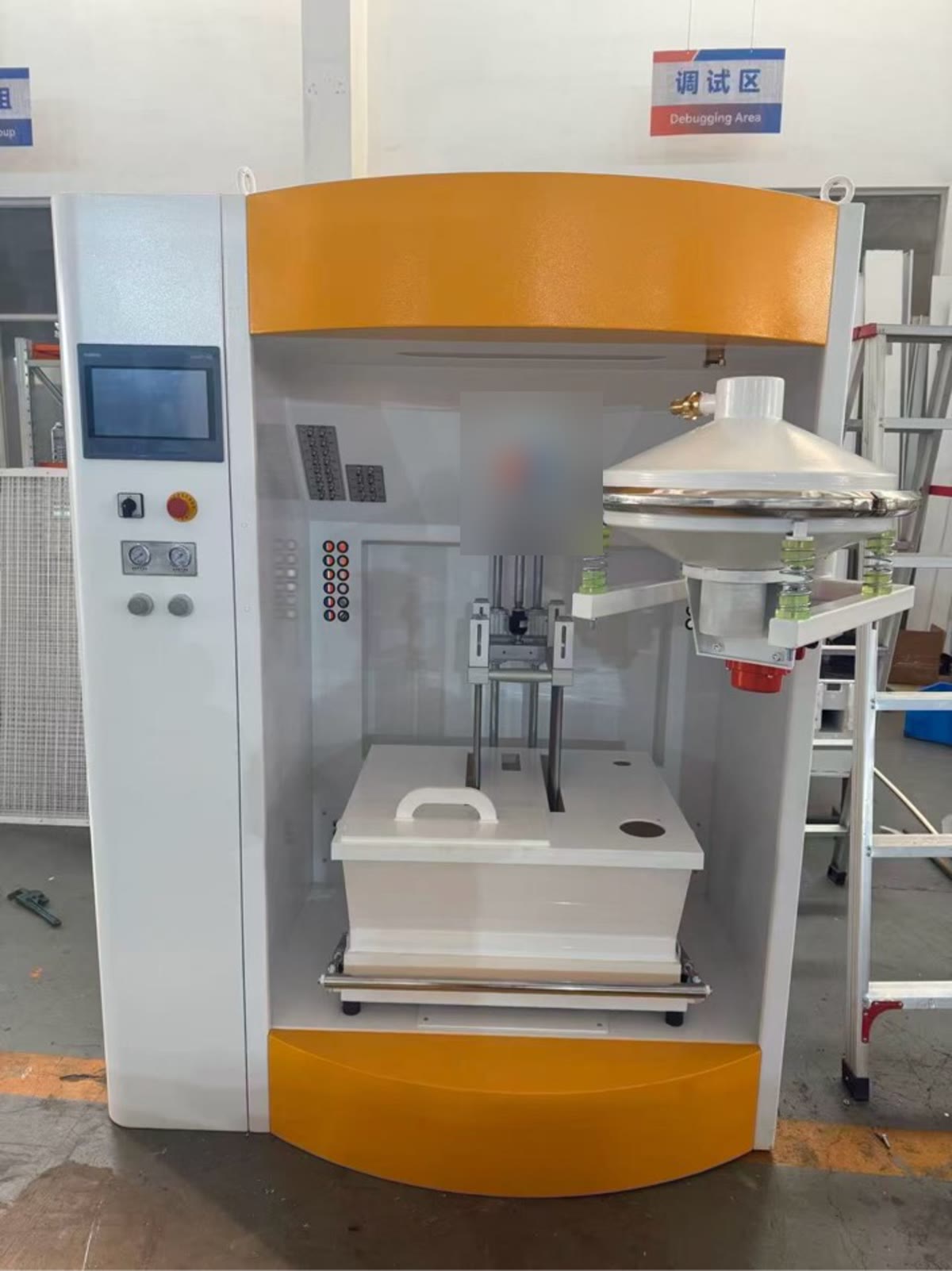
Multiple hoppers with fast switching, so a colour change does not stop the line for the whole shift.
Multi-colour linesSealed powder path for better hygiene and less dust in the working area — useful where operators are close to the booth.
Sieves, hoppers and pumps sized to the guns and the recovery rate of your line.
Start with manual guns and add automation later — the line is built so that reciprocators, recognition and robots can be introduced without rebuilding the booth.
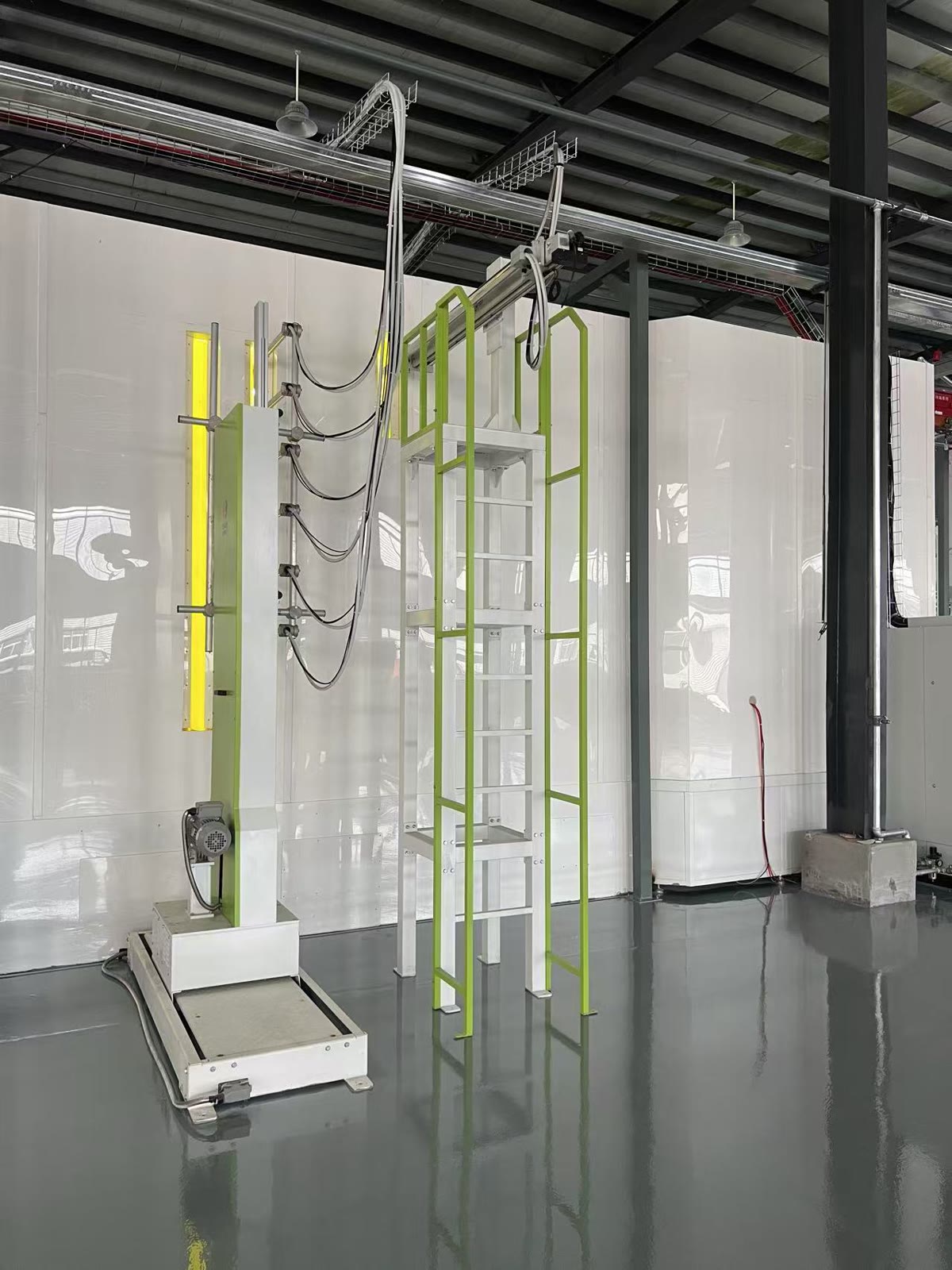
Top and bottom spraying with inversion, four-dimensional reciprocating machines, short-stroke units and robot booths.
Manual → fully automaticWorkpiece recognition, gap detection, measuring light curtains and laser scanning — the gun only sprays where there is a part.
Line control, recipes and diagnostics in one panel, with the safety chain wired into the same cabinet.
Powder is a combustible dust, so this is the part of the line that gets checked at acceptance — and the part that most suppliers quote loosely. Ours is a package: detection, isolation, venting and suppression.
| Operating voltage | 100–240 V AC or 24 V DC |
|---|---|
| Terminal rating | up to 2.5 mm², 500 V, 24 A |
| Current consumption | 250 mA – 1.5 A / 24 V DC, 60 W |
| Backup battery | 2 × 12 V / 2.6 Ah, ≥ 4 h operation |
| Operating temperature | −20 to +50 °C (electronics) |
| Response time | 2.0 ms + 0.1 ms per zone, adjustable 1–240 s |
| Event log | 1024 events |
| Communication | CAN, 250 kbps |
| Relay output | 24 V DC / 8 A |
| Protection class | IP65 |
Machine frames, housings and welded fabrications — the closest fit to our crane customers.
Bumpers, wheels, brackets and structural parts.
Steel sections, profiles and metal facade panels.
Cabinets, enclosures and appliance housings.
It depends on the booth type and how many colours you run. The sandwich arc booth with a quick-change supply centre is designed for frequent changes; we quote a realistic changeover time for your line rather than a marketing number.
Workpieces (drawing or photos), maximum size and weight, target output per shift, powder type and number of colours, available floor space and power supply. With those we can size the line.
Yes — detection, isolation, venting and suppression are quoted together with the booth and the recovery unit. The control panel and detector specification is listed in the table above.
Yes. The booth and recovery unit are sized so that reciprocators, recognition systems or robots can be added without replacing them.
Typically 45–90 days depending on line size, plus shipping. We give you a written schedule with the quotation.
We supply drawings, remote guidance and, if needed, arrangement of a commissioning engineer. Tell us your site conditions when you enquire and we will quote the options.
Send a drawing or photos of the part, plus your target output per shift. We reply within 24 hours with a line proposal and a quotation.